Need to Read Now: ABC Shark & Investor Calls Out Men Big Time
Send this to your dad. Tell him to thank you later.

What else do women have to do to be taken seriously?
Seriously.
We're still battling egregious sexism in tech and finance. This week made the blatantly clear. And earlier today, Chris Sacca, a former American venture investor (he was an early investor in Twitter and Uber), and ABC Shark Tanker with a front-seat to the happenings in Silicon Valley published the following essay on Medium. (We encourage everyone to click and read the whole thing.)
A crucial except reads:
“In my mind, because I hadn’t acted in a way that exploited an imbalance of power or vulnerability in a VC-founder relationship, I’ve generally considered myself one of the “good guys.
But’s that’s the crucial lesson I am learning right now in real-time: It’s the unrelenting, day-to-day culture of dismissiveness that creates a continually bleak environment for women and other underrepresented groups. I contributed to that, and am thus responsible for the unfairly harder road that everyone other than white men must travel in our industry.
I am sorry.
It’s also become clear to me that I didn’t consistently use my power and influence to call out bad behavior by industry peers. The passive acceptance of exclusionary words and deeds is not okay.”
To this we say YES, but we also want to know why? Is it something we said? Or wore? Or didn’t. Does misogyny and gender-biased investing really run that deep? Yeah, it does and a vital element of what Sacca is saying is that even well-meaning men are part of the sexist hamster wheel. To this we say: work harder. The investor is going on record that “As a white guy, even before I made any money, I benefitted from extensive privilege.”
A privilege not afforded to women or any minority.
"Even well-meaning men are part of the sexist hamster wheel."
Tweet this.
Outspoken entrepreneur, founder and CEO of MakeLoveNotPorn and self-professed “Michael Bay of Business,” (she blows shit up) Cindy Gallop took to her Twitter in praise of Sacca’s words. Gallup tweeted: “Tech world has missed out on many female-founded potential unicorns bc of systemic bias + sexual harassment.”
It’s a bias that runs through almost every single meeting. Even though, as Austin mayor Steve Adler pointed out at the beginning of June in response to an angry letter about a female-only screening of Wonder Woman, “What if someone thought you didn’t know that women invented medical syringes, life rafts, fire escapes, central and solar heating, a war-time communications system for radio-controlling torpedoes that laid the technological foundations for everything from Wi-Fi to GPS, and beer?”
Yeah, what if. Again, is there something else we need to do to be taken seriously? More beer? Better GPS to steer you away from your sexism?
Earlier this month, Neil Blumenthal, co-founder and CEO of Warby Parker, told the crowd at inaugural Vanity Fair Summit that as his wife, Rachel Blumenthal, was securing funding for her company Rockets of Awesome her experience was vastly different than his. “When my wife was raising money,” the CEO shared with the crowd, “every male VC would ask, ‘How do you spend your time?’ She would say, ‘What do you mean?’ What they meant was, ‘You have kids.’” This was always a deterrent for male investors. Neil went on to say, “When I raised money VCs would use kids as a reason to bond with me. ‘Oh I have a great nanny recommendation.’ It’s insanity.”
Here’s ONE of the many problems woman face: it’s the every damn day micro-aggression (like those that Sacca refers to) that make women question their own competence. Micro-aggressions grind slow, but they grind fine. And they make us wonder if we truly do deserve a seat a the table. Or the money. Or the position. (Yes, we do.) But it’s hard to continually pump yourself up, when the world around you wants to bring you down. Or when we have a sitting President calling out a woman’s supposed freakin’ facelift on his Twitter. Talk matters.
"Micro-aggressions grind slow, but they grind fine."
Tweet this.
So does putting your money where your mouth is. Investing in female-led and diversified companies IS the future. Those who aren't on board are welcome to fall off the ship. Men aren’t owed a life-preserver at this point.
Women like 52-year-old former Wall Street maven, Sallie Krawcheck know this. Krawcheck who once ran such elite institutions as Merrill Lynch, Bank of America, and Smith Barney, is leveraging her 30 plus years of professional expertise to help women build and invest wealth and “unleash women’s financial power.” With Ellevest, Krawcheck is on a mission to close what she calls the “gender investment gap,” an extension of better-known disparities such as the gender pay gap and the gender debt gap. “I have become truly convinced that getting more money into the hands of women is a positive for everyone,” explains Krawcheck, asserting that the “gender investment gap” costs professional women hundreds of thousands of dollars, if not more, over their lifetimes. “Closing this gap helps the women themselves, but also their families, society, and businesses. It also solves a lot of society's problems: for example, the retirement savings crisis is actually a women's crisis, given how much longer we live then men (and that we retire with less money than they do).”
Cindy Whitehead, CEO and founder of the Pink Ceiling is on the same mission. “What rips the sheets off in the morning for me is fighting injustices," the CEO shares. "It is an injustice that women get 2% of funding. It’s a ridiculous idea that half of the population only has 2% of the good ideas.”
They say a woman’s work is never done. But not this time. This time men should heed the words of Sacca and put in the work.
MORE FROM OUR BLOG






Why I Quit My Highly Coveted Job When I Was 8 Months Pregnant
Office politics suck.

image credit: Rick Rodney Photography
A recent study published in the Journal of Experimental Social Psychology confirms what women have known since the dawn of time—that we're damned if we do and damned if we don't. While this spot-on summary of the female experience could conceivably refer to just about anything (ranging from kegeling wrong to doing kegels), in this scenario, we're talking about taking maternity leave. More specifically, that a look at the attitudes of 200 working men and women in the US and the UK finds that a "woman who took time off was seen as less committed and competent at work" while the woman who didn’t was "judged to be a worse parent, a less desirable partner and a less caring person." SEEMS REASONABLE.
Speaking of fair—the Pew Research Center reports that of 41 developed nations, the US is the only one doesn't mandate paid maternity leave. To put our antediluvian policies into perspective: Estonia offers more than a year and a half of paid leave to new parents, while 31 of the 41 aforementioned countries have modest plans in place for fathers, with Japan, Korea, Portugal, Norway, Luxembourg and Iceland leading the way, offering a minimum of two months leave for new dads.
On the other end of the spectrum, there’s the US, where the Department of Labor found that 1 in 4 women return to work within 2 weeks of giving birth. If you’ve yet to firsthand experience the miracle of life and all its glorious indignities (speaking of: see pooping article here), it’s quite common for women to bleed from their vaginas and wear industrial diapers for up to six weeks postpartum. Frankly this is on the lesser end of the symptom spectrum, which includes: leaky breasts, perineum pain, abdominal cramps, difficulty urinating, cracked nipples, postpartum depression, and on. Needless to say, two weeks ain’t gonna cut it.
Amazingly, while the US ranks dead last for parental leave and the majority of mothers return to the office before they’ve even had a change to slather themselves in nipple butter and get a decent night’s sleep, we’re still finding it in our cold, capitalist hearts to judge the fortunate few who’ve received a couple of measly paid weeks leave. Talk about getting the sh*t end of the positive pee stick.
In my personal experience as a woman living, working and expecting in California-—the state considered to be the gold standard of maternity leave for the United States (which, is kind of like saying a Southwest Buttermilk Crispy Chicken Salad is the healthiest thing on the McDonald's menu)—the system is broken. Without a full legal team in your corner, it’s nearly impossible to decode and navigate. Case in point: After two years of running a successful freelance business, I found myself four months pregnant, craving stability (AKA a reason to put on pants in the morning) and accepting a full-time offer as Editorial Director for a popular fashion brand that sells Pantone perfect mules to a customer base that’s probably 17% aspiring mommy blogger. It felt like a perfect match.
Now, while I didn’t take the job for the promise of paid maternity leave, it was definitely a perk I firmly and directly addressed with Human Resources during the interview process. I was explicitly mislead that I would be getting said perk. Foolish me for not getting this in writing (always get it in writing kids). because as my due date approached and I began coordinating the plan for my departure, it became clear that my employers had no intention of giving me any paid time off. Fine print: I had not been at the company for one year. Under the California Pregnancy Disability Leave Law I was entitled to keep my job with up to four months unpaid leave, however, being a stubborn-ass feminist and not wanting to feel like a disposable resource, I politely gave my two weeks notice.
Women across the United States deal with this every single day, as a vast number of companies remain committed to shelling out the bare minimum. Why wouldn't they? It's what they're legally allowed to get away with. Even those that claim to be feminist. Take for example, recent headlines haunting the fashion world outing female founders whose internal company structures don’t practice the feminist agendas they preach. This fauxminist phenomenon runs so deep that the humorists at McSweeney’s even penned a “Guide for Brands That Have Recently Discovered Women.” It encourages companies patting themselves on the back for “rah-rah-ing women” on their twitter to ask themselves, “Does our family leave policy reflect the real world or was it drafted with giraffes who give birth standing up and then go about their business in mind?”
Thankfully, there's growing minority of modern thinkers-—including Netflix, Etsy, Spotify, and a slew of tech heavy-hitters-—who are realizing that supporting mothers is not a frivolous expense, but an investment in their future. One such pioneering label is Innerwear brand Richer Poorer. Despite being a startup, the company extends all female employees a full, 12-week paid maternity leave and even offers the dudes a flexible six-week paternity leave policy that is a transition back into full-time.
"Supporting mothers is not a frivolous expense, but an investment in their future."
Tweet this.
“Regardless of our size, we are very much a people and family-first business at Richer Poorer,” says co-founder and CEO Iva Pawling. “My Co-Founder Tim and I are both parents, so we hold a lot of value in supporting the other parents on our team, and especially the new, or soon-to-be-new bunch.” While the logistics of being small and having a valuable team member out on extended leave are certainly complicated, Pawling says it’s a choice to make a long-term investment in the business, and one that’s proven to work. “We really have found that the rest of the team picks up the slack in their absence and carries the projects or responsibilities forward.”

No brainer:
Internal company structures should practice the feminist agendas they preach.
Even if you're lucky enough to work at a company with some kind of paid parental leave, knowing your rights and navigating the loopholes and complexities of the system can feel like it requires PhD. Full disclosure: numerous phone calls and hourlong wait times to determine my own eligibility for government wage replacement since returning to freelance has brought this writer to tears on more than one occasion. (I may have threatened to call the police on one representative. Their crime? Deliberately withholding information). My child is due in a week, and I’m still not totally clear on what, if anything, I’m entitled to, and how exactly to go about claiming it.
That’s where Lauren Wallenstein, Founder of Milk Your Benefits, a consultancy that helps expectant parents maximize their parental leave in the State of California, comes in. Wallenstein explains that expectant mothers often mistakenly believe that they are entitled to at least 12 weeks of leave. This is frequently not the case, due to varying factors including duration of employment, hours worked, employer size, etc. She says that many times confusion around leave is exacerbated because employers are themselves unclear of how to correctly explain and administer benefits due to lack of standardization. I’d venture to say many employers prefer their employees to remain in the dark and disempowered about these decisions.
“Expectant parents need to ask for written policies so that they can interpret the available benefits for themselves,” Wallenstein urges. “Never depend on what a friend or coworker tells you as the information is very often incorrect or is being incorrectly applied to your case. If human resources answers your leave questions, make sure you get them in writing and have HR provide the source documents that formed the basis of those answers. Most importantly, if something doesn't sound right to you, don't settle. Milk Your Benefits can help you sift through the paperwork so nothing is left on the table.”
“Expectant parents need to ask for written policies so that they can interpret the available benefits for themselves."
Tweet this.
In a Wall Street Journal Op Ed, YouTube CEO Susan Wojcicki argued that “Paid maternity leave is good for mothers, families and business.” As evidence, she cited that the rate at which new moms left Google fell by 50% in 2007 when the company increased paid maternity leave from 12 weeks to 18 weeks. She should know, as she was Google’s first employee to take maternity leave in 1999. This sentiment is echoed by Wallenstein, who says that “forward-thinking employers recognize that paid parental leave benefits act as a retention tool for employees.” Furthermore, she notes, “Parents who receive paid leave and who are physically and emotionally ready to return to work are more likely to feel a sense of loyalty to that employer and are less likely to leave their jobs. When an expectant parent gets the sense that the employer is encouraging a short leave, is being stingy with money, or is being less than helpful explaining benefits, it leaves a powerful and lasting bad taste in their mouth. Because what it suggests is a company ethos that doesn't value work/life balance.”
Until paid leave is mandated for all, the burden will continue to fall on business owners to implement change, start a dialogue, and set precedents. “The responsibility is on all of our shoulders, men and women alike who are in position of power as employers, to make the right decisions and to become more vocal about the subject of both maternity AND paternity leave,” says Richer Poorer’s Iva Pawling.
If doing what’s right for new parents and ultimately for your business isn’t enough to incentivize employers to step up to the plate, perhaps they’ll be motivated by the desire to avoid ending up as the target of a scathing Glassdoor review. When Donald Trump’s approach to maternity leave is a more progressive than yours, it’s perhaps time that you engage in a healthy dose of soul-searching. And while you’re at it, please remind yourself that before you were all up in the boardroom, you too were snuggled up in a cozy womb.
Jane Helpern is a freelance writer, copywriter, and founder of Jane Says Agency. She enjoys helping brands find their voice, writing about fashion and feminism, and walking-at-an-incline-with-wine™
MORE FROM OUR BLOG
Roundtable Talk: How We Really Feel About Additional Social Platforms
Is it over yet? Just beginning? Are we machines yet?

Source: @felixcartal
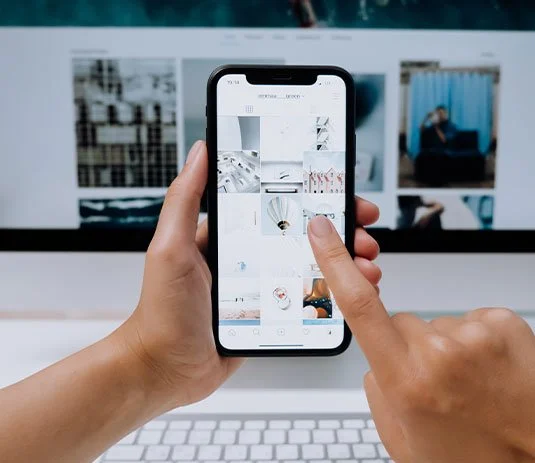
The addition of Instagram Stories raised a few eyebrows last week, not only because the newest arm of the photo-sharing app looked like a carbon copy (minus the dog filters) of Snapchat, but because it was yet another piece of the social layer cake that has many already feeling stuffed. Thanksgiving style.
There are now a total of five major social players: Instagram, Facebook, Snapchat, Twitter, and Pinterest. Add in the characters that are brand specific-- YouTube if you're in the beauty space, Vine if you're in comedy, and LinkedIn if you're a business, and your social Rolodex is on constant spin. Update one. Then the next. Tweet this. Pin that. Share. Share.
SHARE.
It's OK to be tired and over it and at the same time want to keep up. Making the decision to stay off a social media platform can come back to bite you, especially if you're a brand. And for those whose JOB it is to keep up, the job description is as shaky as a fault line.
For social directors and bloggers the ever-shifting landscape is not only difficult to navigate, but the addition of new platforms can feel completely overwhelming. For some, the challenge is exciting, keeping them on their toes and at constant warp speed. "If you want to work in social," says Priscilla Castro, Social Director here at Create & Cultivate, "you know what kind of a beast you're going to battle. It's not a secret that new platforms are added or that one day, a platform you worked really hard to build up, could all of the sudden become obsolete. But that's the great thing about this space-- regardless of your background, you learn as you go because it's constantly evolving. It's safe to say that it's quite different from when I started working in it 3 years ago."
That's not to say it's not disheartening. "There's definitely an 'all that work for what?' feeling to it sometimes, but that's also the challenge and where the exciting part of the job is. How to stay relevant. How to be an early adaptor. How to be social, but for business. It's the new communications major."
Artist Tania Debono who runs the popular Instagram @thewriting also makes a living as a social media strategist. Tania says that "the influx of content is drowning us all."
"The influx of content is drowning us all."
Tweet this.
Regarding Instagram Stories she believes, "brands with a strong community on Instagram have been trying to find their ‘voice’ on Snapchat for some time, but with the new update many brands and personal brands that haven’t properly broken into Snapchat will abandon the platform to invest time into Instagram as a whole."
For her, "Snapchat has become an after-thought, I want to share more meaningful content on the fly with my Instagram community only. I’ve noticed a decline in updates from people and brands too, and those in my real life community that didn’t invest time in Snapchat are creating brilliant content through Instagram stories."
So how do you decide what your social strategy should be if it's always changing? Or when and if you can KO a platform?
Adrianna Adarme who founded the food blog A Cozy Kitchen says, "I haven't explored Instagram Stories a ton but I do think think it can be really beneficial for people who already have a strong following on the platform; it's sort of nice that it's all in one place."
And that's the general current sentiment. It is "nice" that it's all in one place because shifting gears through the apps is exhausting, for both content creators and consumers. Adds Adrianna, "I don't think it's the end of Snapchat though, I think its core audience was and always will be a teen, early twenty-something audience and I believe they'll continue to use it. I'm testing out both to see what works for me but I already miss the dog filter and stuff." Therein lies the rub. We all fall prey to "testing out both," and before we know it, we've added them all.
It's something that colleges have taken note of as well. Social Media degrees are becoming more popular than ever, teaching students how to engage audiences through creative content and impactful messaging.
University of Southern California offers a master's program in digital social media from its journalism school. The degree, according to the program's website, "teaches you leadership and management of social media, digital media, and online communities," so that student, "develop expertise in the practice, theory, and strategies that are essential for success in today's business and social landscape."
But what is impactful one semester, might not be the next. The same goes for your social strategy.
"While a degree in social media is amazing and useful," says Priscilla, "the curriculum you learned in a semester in college will be obsolete by the time you enter your work field. There is no way to 'do' social media 'by-the-book,' because it's always evolving."
"There is no way to do social media 'by-the-book,' because it's always evolving."
Tweet this.
"To do it right," she adds, "you have to move with the ebbs and flows of the space and not dismiss new platforms that will change your day one strategy. Just get with it, get your hands dirty, and create amazing content that you know your audience will love."
MORE FROM OUR BLOG