
6 Things You Can Do to Support Small Businesses Right Now During the Coronavirus Crisis
“Small businesses are the backbone of our country, and we need to support them the best we can.”

Photo: Smith House Photography
Small businesses need our help more than ever right now. The coronavirus crisis is seriously impacting restaurants, fitness studios, salons, and brick-and-mortar shops across the country. To find out what we can do right now to support them, we tapped money expert and financial advisor Kristin O'Keeffe Merrick, a financial advisor at O'Keeffe Financial Partners, for our Ask an Expert Instagram Live series.
“Small businesses are the backbone of our country, and we need to support them the best we can,” the money expert and financial advisor reminded us during her Ask an Expert segment on our Instagram Live feed. Of course, we here at Create & Cultivate couldn’t agree more, so we’re sharing Merrick’s top tips for how to support small businesses during this challenging and unpredictable time.
Here are six things you can do right now—without leaving your couch—to support local small businesses during the COVID-19 pandemic if you’re able to.
1. Order delivery, takeout, or even a gift card from your favorite local restaurants.
“Make sure you’re tipping when you go in for takeout. Servers aren’t serving people in restaurants right now so be sure to tip if you can to help support them.”
2. Shop your local brick-and-mortar small businesses online.
“Think ahead to some events you need to shop for (weddings, bridal showers, baby showers, Mother’s Day) and shop your local small businesses online.”
3. Stream fitness classes from your fave local studios online.
“If the instructors you love are giving free classes, consider sending them a tip ($20 via Venmo or Cash App), since they’re probably not getting paid for that service.”
4. Call up your local salons and buy gift cards for your next treatments.
“Think ahead to your next hair appointment, your next manicure or pedicure, etc., and consider buying a gift card now.”
5. Use your voice to help spread the word about local businesses that could use the extra love.
“Help your local community for free by posting about your favorite local businesses on Instagram, Twitter, Facebook, etc.”
6. Pay your people.
“If you’re still getting a reg paycheck, pay your housekeeper, pay your dog walker, pay anyone who helps you with childcare.”
For more expert advice on how to navigate the COVID-19 crisis, tune in daily at 9 am, 12 pm, and 3 pm PST, for new installments of our Instagram Live series, Ask an Expert.
Follow Create & Cultivate on Instagram, check out our Ask an Expert highlight reel for the schedule, and hit the countdown to get a reminder so you don’t miss out. See you there!
Up next: 7 Things a Financial Expert Wants You to Do to Prepare for COVID-19
MORE ON THE BLOG

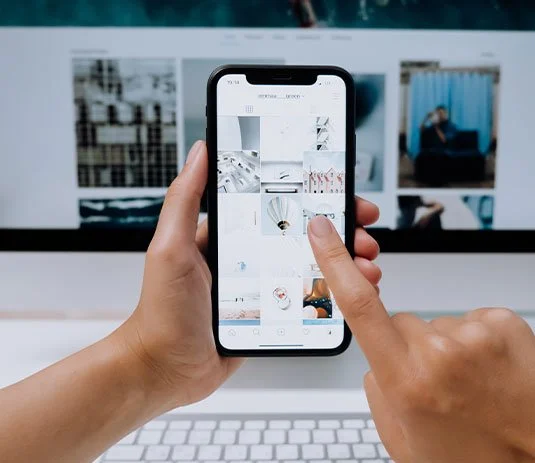







Slow Stories: Creating and Consuming Content During the COVID-19 Outbreak
“We've never had more tools at our disposal to create content that inspires action.”

Photo: Courtesy of Slow Stories
The spread of COVID-19 has upended the business community on a global level. However, living in an age of profound interconnectivity has brought people together in ways that we never expected—especially on social media.
Like so many others, I've tirelessly refreshed my news and social feeds and watched as they've unearthed a variety of responses to the uncertainty that we're all facing. Recently, I've also ruminated on the ways content can play a role in facilitating productivity in a time that will inevitably call for slowing down in nearly every aspect of our lives.
In one of my earlier columns, I outlined a few key pillars that our initial podcast interviewees attribute to the slow content movement. But as I look at the below touchpoints again (and in the context of present-day challenges), I find myself thinking about how we can take these one step further:
Slow content provides value and purpose.
Slow, thoughtful content has a clear intention. Whether it is to inspire or educate, creating content in this climate forces us to think about how we can provide value beyond our immediate business goals. Ask yourself: Can I provide value to my community by sharing a founder anecdote or reposting a fun image that evokes laughter? Even in a professional context, times of uncertainty offer the opportunity to create value for our customers in new (and necessary) ways.
Slow content considers data and fact-checking.
Content can be an incredible tool to drive conversations forward. Still, the spread of misinformation can also make it difficult to discern the difference between what is fabricated and what is real. During times where there is an uptick in sharing information, creators and businesses can engage with their community by using content to call attention to credible institutions and outlets.
Slowing down our relationship to content makes us nicer, more well-rounded people.
In a rapidly-changing news cycle and digital sharing landscape, slowing down our relationship with content can create more mental runway to think about the things that add value to our lives (beyond our devices). In the case of a global pandemic, finding a balance between staying aware and engaged while establishing healthy digital consumption habits will be essential in how we relate to one another through this trying time.
With so much hanging in the balance, our professional endeavors are certainly no exception. Many people in my own network have begun to think about how content and storytelling will play a role in their brands over the next few months. Below, I'm sharing a few things to consider as we recalibrate our routines and work through the challenges that are becoming increasingly present in our digital age.
Re-evaluate your communications strategy.
When there's an increase in online communication, content creators and business owners have the opportunity to streamline—and in some cases, reevaluate—their content, PR, and brand messaging so that the message they wish to convey is consistent across all communications channels. Use this time to think about what your brand wants to say, how you want it to come across, and how it can stay in-line with your usual voice and tone to avoid sounding inauthentic to your followers or customers.
Create content that inspires social/philanthropic participation.
We've never had more tools at our disposal to create content that inspires action.
However, it's essential to consider how to do this in a way that encourages inclusivity. From sharing charity donation stickers on Instagram Stories to creating bespoke content that ties in more personal brand narratives, creating content that can diversify how your community can get involved can elicit a powerful response. Thinking holistically about content in this way will also create more avenues for charitable goals to be reached, too.
Pause the post.
One of my interviewees said it best: "There is power in the pause." As we become more inundated with content from all directions, we have another option at our fingertips: to pause and step away. As consumers of content, we often forget to be discerning in what we choose to engage in a landscape that demands so much of our time and attention. Communicating what you want (and don't want!) from your favorite brands can be valuable feedback for business leaders to make informed decisions about their future storytelling and brand strategies. At the other end of the spectrum, if you're a content creator and unsure about how to proceed with your current storytelling efforts, use this period to take a step back and reflect. Your followers will thank you for it in the long run.
The points I've laid out in this article only scratch the surface of what we can be doing online. In any case, I hope this piece provides a jumping-off point for you to make thoughtful decisions about the kinds of stories you or your brand wants to tell in the near future. For more insights and musings on creating slow content and stories with longevity, I invite you to check out the ”Slow Stories” podcast (stay tuned for new episodes launching this spring) along with articles from my column here. And, most importantly, I wish you all health and happiness in this tumultuous time.
About the Author: Rachel Schwartzmann is the founder and CEO of The Style Line LLC. She created The Style Line in late January 2011 via Tumblr and has fostered The Style Line’s brand in its growth since then. Rachel has been featured in esteemed sources including Forbes, Refinery29, and MyDomaine and has also spoken at Create & Cultivate and Columbia University on establishing a unique brand point of view and entrepreneurship. On October 1, 2015, Rachel took The Style Line in a new direction as a boutique content company with the introduction of its slow content agency CONNECT(ED)ITORIAL.
You can follow Rachel at:
The Style Line: @thestyleline (Instagram, Facebook, Twitter)
CONNECT(ED)ITORIAL: @connecteditorial (Instagram)
Rachel Schwartzmann: @rachelschwartzmann (Instagram) @RMSchwartzmann (Twitter)
MORE ON THE BLOG

Ask an Expert: 5 Things a Lawyer Wants You to Know About Force Majeure Clauses and COVID-19
Can you get out of a contract RN?
We’ve been spending a lot of time at Create & Cultivate HQ discussing how we can best show up for and support our community during this uncertain time. Community is at our core, and connecting with others through one-of-a-kind experiences is what we love to do. While the world has changed, our mission has not. We’re committed to helping women create and cultivate the career of their dreams, which is why we’re proud to announce our new Ask an Expert series. We’re hosting discussions with experts, mentors, and influencers daily at 9 am, 12 pm, and 3 pm PST on Instagram Live to cure your craving for community and bring you the expert advice you’ve come to know and love from C&C. Follow Create & Cultivate on Instagram, check out our Ask an Expert highlight reel for the latest schedule, and hit the countdown to get a reminder so you don’t miss out!

Photo: Courtesy of Jamie Lieberman
Not to state the obvious, but talking to a lawyer can be intimidating. Between tracking down the right lawyer, budgeting for a consultation, and knowing which questions you need to ask, seeking out legal counsel can be daunting for a lot of small business owners. With that in mind—and given these unprecedented times—we asked an attorney to answer all your burning questions about force majeure contract clauses in the wake of the COVID-19 pandemic.
In this installment of our Instagram Live series, Ask an Expert, we tapped Jamie Lieberman, a seasoned attorney and the founder of Hashtag Legal, to discuss everything you need to know about force majeure clauses right now. Read on for five things you should know about getting out of a contract due to unforeseeable circumstances. If you missed the conversation, you can watch it in full here, and be sure to tune into our next Ask an Expert conversation on Instagram Live.
1. First things first, what is a force majeure clause anyway?
“It is a clause that’s written into many contracts that allows a contract to be canceled or postponed due to impossibility performance, which can be caused by things like natural disasters, strikes/riots, or ‘acts of God.’ Things that make it impossible for people to perform their obligations.”
2. What exactly is considered an act of God by a force majeure clause?
“Usually, an act of God includes natural disasters; hurricanes, floods, tornadoes. Illness is not always in the definition of force majeure. If you have a contract that you’re not sure about, you check whether or not there’s a force majeure clause in it and how it’s defined. Some contracts allow for cancellation and some just allow for postponement.”
3. What if I don’t have a force majeure clause in my contract?
“There are a number of ways you can be protected whether or not you have force majeure in your contract. If the purpose of the contracts is frustrated, meaning there’s no way for you to do it, you can be protected by the doctrine of impossibility or impracticability. If you can’t perform your contract, have that conversation with your client and see what you can do to postpone. Have a negotiation, have a conversation.”
4. What can I do if someone is trying to get out of a contract and I don't have a lawyer?
“Have the difficult conversations—don’t avoid them. Start negotiating and try to make new agreements so that you can move forward and both parties are protected. The worst thing you can do is avoid having these conversations.”
5. Do I need a contract?
“If there is anything of value being exchanged, whether it’s money, goods, or services, having a contract is a best practice. Contracts are meant to protect both parties—they’re not designed to favor one party or the other. And if you have everything in writing, you know what will happen in the event of something like the COVID-19 outbreak.”
About the Expert: Jamie Lieberman, owner and founder of Hashtag Legal has been a practicing lawyer for nearly 15 years. As an experienced entrepreneur, Jamie understands the unique needs of business owners at different stages in their organization’s growth. She has a deep commitment to making legal accessible and regularly speaks about legal matters, the art of negotiation and entrepreneurial topics at events such as Alt Summit, Podcast Movement, and FinCon and as an expert source for media like Digiday and Forbes. You can also catch her as a co-host on The FearLess Business Podcast.
Tune in daily at 9 am, 12 pm, and 3 pm PST, for new installments of Ask an Expert.
Follow Create & Cultivate on Instagram, check out our Ask an Expert highlight reel for the schedule, and hit the countdown to get a reminder so you don’t miss out. See you there!

6 Tips for Creating a Productive Work-From-Home Environment
Become a boss at working from home.

Photo: Polina Zimmerman for Pexels
Working from home. It sounds great in theory, but it actually takes a lot of discipline to establish a routine that makes working from home productive and fulfilling. Given that many companies are currently implementing work from home policies to help flatten the curve and prevent the spread of COVID-19, I feel compelled to share my tried-and-true tips for creating a productive work-from-home environment.
As someone who’s been freelancing and working from home for the past five years, I’ve gone through all of the ups and downs WFH life can present—from feeling lonely and needing to talk to someone to needing to get out of the house and take a break (while practicing social distancing, of course). Scroll on for my tips on how to create a dedicated work space, set office hours, eliminate distracts, and more.
Create a Dedicated Work Space
Find a place in your home that you can dedicate to work. This will be different for everyone, and while I highly encourage having a desk, a dining room table or breakfast bar are great substitutes.
I don’t recommend your workspace be on your couch or on anything where you can recline. While I love being on my laptop and having my feet up on my couch, I am never as productive as I am when sitting upright.
When choosing a space for work in your home, try to find an area that has the following:
Natural light
Quiet
Minimal household distractions (dirty dishes in the sink, children’s toys on the floor, etc.)
Find a space that you can check-in for work and check-out for everything you’d typically do while at home.
Set Office Hours
As a freelancer, it’s incredibly important to have office hours. Not only to manage client expectations but to give yourself structure.
Setting office hours should empower you to develop a routine for yourself like you typically would if you had a 9-to-5 office job. You’d wake up in the morning, enjoy your morning cup of coffee, maybe squeeze in a yoga class before you get dressed, and head to work. The same should be taken into consideration when you work from home.
Freelance life is supposed to allow you to do all of the things you want to do with your time. Don’t let it create an opposite effect where you convince yourself to always be on and working just because you’re able to do it from the freedom of your own home.
Eliminate Distractions
It’s so important to eliminate any distractions from your home that would take you away from getting work done. For me, I need my home to be clean - period. If the home isn’t tidy, I’m not focused.
Other distractions I try to eliminate are:
Mindless social media scrolling. There’s a difference between taking time to engage on social media to benefit your business and spending 20 minutes scrolling through videos of pigs taking a bath. Cut the scroll!
Noise. If noise distracts you (or a lack thereof), plug in your noise-canceling headphones or put on some white noise to help you regain focus.
Pets. I have two dogs who can be very needy for attention. They sleep for most of the day, but every now and then they have a tendency for loudly playing with each other while I’m on client calls. When that happens, or if I think it could happen, I put them in their beds in our master bedroom and shut the door. It’s never for long and it helps calm them down - and helps prevent me from having to apologize to a client for the squeaky toy noises in the background.
If you find yourself being distracted by a common theme throughout your days, find a way to eliminate that distraction so you can stay focused and do your best work.
Get Out of Your PJs
We all have days where we want to stay in our PJs, but it’s important to get out of the jammies and into something that says, “my day has started.”
Most of the time I will change out of PJs and into activewear or comfortable denim. I’ll wash my face, brush my teeth and hair, put on some CC cream and deodorant, and then get to work. It’s a small effort that makes a big difference.
Talk To Someone
One of the biggest things I didn’t realize about working from home is just how lonely it can be.
You are by yourself all day and unless you have clients who love phone calls, most of your correspondence will primarily be done through email. It’s important to talk to someone; anyone. Make time to pick up the phone and call a relative or an old friend. Schedule calls with people in your network so you don’t lose your conversation skills.
I realized a change in myself probably around my second or third year of freelancing, where I would struggle with conversation because I just wasn’t having any. I’d either talk too long or too fast, have difficulty forming sentences, and just felt awkward. This is not me.
Now I talk to everyone.
I am not shy when it comes to conversation and make an effort to have a casual chat with just about anybody I come into contact with throughout the day. That’s people I pass by when I’m walking the dogs, the barista at Alfred’s, Anthony who does my nails at Olive & June, Mary who delivers our mail… AN-Y-BOD-Y.
Get Out of the House
How many of you working from home and reading this typically don’t leave your house during the workweek? 🙋 I get it.
Your home is your office and your office is your home, but it’s still important to get out of the house every once in a while. Keep yourself active and engaged with things happening in your community so you can get out of your PJs, talk to somebody, and enjoy those office hours! (You like what I did there?)
It’s important to get outside and break away from work so you can actually stay engaged in work.
When I spend hours on my computer without any breaks my mind becomes fatigued, and I become less productive. So I’ll take the dogs for a longer walk, do a workout class on my balcony, or take my laptop to the coffee shop down the road and just take in a bit of new scenery to help adjust my internal boss mode.
So if you’re feeling uninspired or having trouble getting anything done, give yourself a break and get out.
About the author: Audrey Adair is a seasoned freelance communications professional and founder of The Scope, a platform providing resources and community to freelancers and the self-employed. Connect with The Scope on Instagram and join their email list to receive your free resource, The Freelancer Starter Kit.
This story was originally published on March 5, 2019, and has since been updated.

Ask an Expert: Here Are 7 Things a Financial Expert Says to Do to Prepare for COVID-19
“This is a public health crisis, this is not a financial crisis.”
We’ve been spending a lot of time at Create & Cultivate HQ discussing how we can best show up for and support our community during this uncertain time. Community is at our core, and connecting with others through one-of-a-kind experiences is what we love to do. While the world has changed, our mission has not. We’re committed to helping women create and cultivate the career of their dreams, which is why we’re proud to announce our new Ask an Expert series. Starting today, we will be hosting discussions with experts, mentors, and influencers daily at 9 am,12 pm, and 3 pm PST on Instagram Live to cure your craving for community and bring you the expert advice you’ve come to know and love from C&C. Follow Create & Cultivate on Instagram, check out our Ask an Expert highlight reel for the latest schedule, and hit the countdown to get a reminder so you don’t miss out!

Photo: Courtesy of Kristin O'Keeffe Merrick
Needless to say, the coronavirus outbreak has financially impacted businesses both large and small and employees and employers alike. With the OECD cutting global economic growth projections in half, the JPMorgan Global Manufacturing Purchasing Manager’s Index (PMI) falling to its lowest level since 2009, and U.S. stocks having their worst day since the 1987 stock market crash, it’s safe to say money anxiety is at an all-time high.
To help assuage our financial fears, we tapped money expert and financial advisor Kristin O'Keeffe Merrick, a financial advisor at O'Keeffe Financial Partners, for the first-ever installment of our Instagram Live series, Ask an Expert. She answered all our burning money questions in the wake of the coronavirus, including, how to cut unnecessary spending from your budget and how to fund your small business after you've maxed out all your credit cards.
Read on for seven things you can do right now to feel financially stable, and be sure to tune into our next Ask an Expert conversation with Jamie Lieberman, attorney and founder of Hashtag Legal, on force majeure and if you can get out of a contract due to unforeseeable circumstances, tomorrow at 9 am PST on Instagram Live. Trust us, you won’t want to miss it!
1. Take stock of your subscription services.
“If you haven’t used your Hulu subscription by day four of self-isolating, you probably don’t need it. If you’re in a cash crunch, consider canceling or putting subscriptions you’re not using right now on hold."
2. File your taxes.
“If you’re worried about a cash crunch and you might be in line to get a refund, file your taxes early. If you’re a freelancer or an entrepreneur, you might need some liquidity right now, so think about filing now to get that refund.”
3. Make an IRA contribution.
“If you have a high risk tolerance for investing, put your IRA money to work.” (Note: If you’re a first-time investor, you should seek out professional advice before taking action here.)
4. Pay off debt.
“If you’re still getting a regular paycheck, use this as an opportunity to pay off some debt and put some money into an emergency fund.”
5. Start a savings account.
“One of the silver linings is that we’re not going out and spending money on drinks/dinner/coffee. Consider moving the money that you’d normally be spending to live and enjoy your life to a savings account or an emergency fund.”
6. Create a budget.
“Think about your fixed and variable costs. Fixed costs are things that won’t go away no matter what: your rent, car insurance, utilities, mortgage, etc. To look at your variable costs, pull up you bank and/or credit card statements for the last three months, and look at how you’re spending your money. Think about where your money goes and why you can’t save money; think about all the things you can lower and ways to allocate ways to save money.”
7. Read books that can help you get more financially savvy.
“If you’re looking to get more financially savvy, there’s no better time. One of the few money books I love is You Are a Badass at Making Money. Don’t overwhelm yourself with info, but use this time to get familiar with financial terms or investment terms.”
About the Expert: Kristin O’Keeffe Merrick is a money expert and financial advisor at her family-run firm, O'Keeffe Financial Partners, based in Fairfield, NJ. Kristin has over 19 years of investment experience, having spent the first part of her career as currency trader, and serving most recently as Vice President at Morgan Stanley. She has contributed to Forbes, CNBC,NY Magazine, Girlboss, Hey Mama, My Domaine, and Coveteur. She is a frequent guest on the Today Show, the NBC Nightly News and Yahoo Finance. Kristin was also recently named as 2020 Badass 50 by InStyle Magazine.
Tune in daily at 9 am, 12 pm, and 3 pm PST, for new installments of Ask an Expert.
Follow Create & Cultivate on Instagram, check out our Ask an Expert highlight reel for the schedule, and hit the countdown to get a reminder so you don’t miss out. See you there!

We Talked to 4 Biz Owners About How They're Tackling COVID-19
Lauren Kleban, Dianna Cohen, and more weigh in.

As a small business, we here at Create & Cultivate understand how much the COVID-19 outbreak is impacting companies across the globe.
By shuttering offices, disrupting supply chains, canceling events, and clearing out public spaces like malls, restaurants, and gyms, the coronavirus’ impact on companies—particularly startups that don’t have the resources of Fortune 500 companies—is significant. However, as our founder and CEO Jaclyn Johnson says, a company’s success comes down to how it pivots and responds during times of great uncertainty.
Of course, we know that you, our Create & Cultivate audience of entrepreneurs and founders, are also grappling with this right now, so we reached out to some of the savviest business owners we know to find out how they’re handling the news, responding as a company, and, most importantly, pivoting their businesses in response. Scroll on to read how four founders are confronting the coronavirus crisis head-on.
Dianna Cohen, Founder & CEO, Crown Affair
How are you handling the news as a founder? Is your team working from home? How have you pivoted to that schedule?
The wellbeing of our team and customers is the most important thing to us. Our brand was built on the concept of the ritual—all the things you do to take care of yourself and make you feel whole. Whether that’s journaling, stretching, or brushing your hair before bed, we’re all about taking those extra few minutes to reset and recharge. During this time of uncertainty and unrest, we're letting our community know it's key to time for themselves and their friends and family that might need support and care as well.
How have the announcements impacted your business operations and financials? What tactics and strategies have you put in place to pivot and ensure your business is successful through this period?
We're monitoring the guidance of the CDC and health officials, so we're currently remote and will keep our scheduled meetings and touch bases, but do them via video or phone. Tools like Asana and Slack have been helpful for daily stand-ups to make sure as a new business (we're six weeks old!) we're staying on track and actively communicating. Because we're a digital-first company that sells products online, we've been able to continue connecting with our customers and growing the business. When the news first hit, we were mindful to order into inventory that wouldn't impact supply chain for our customers, and internally communicate updated daily goals and KPIs given there are global updates daily.
What advice can you share for small business owners, founders, and entrepreneurs who are also reeling in response to the news?
1. Have honest conversations with your team and community, we're in this together.
2. Your senior leadership team should plan into a mindful monthly spend to make sure you're preparing for any potential changes in supply chain or any area of the business that might be a meaningful part of your overhead.
3. See this as an opportunity to evaluate your strengths as a business and focus on clever, new ways you can still bring that to your audience.
Madison Ruggieri, Co-Founder, Onekind
How are you handling the news as a founder? How have you responded as a company? Is your team working from home?
As a founder, we’re really trying to carry on business as usual. We’re an online retailer and a very small team in a large office space, so, as of now, we’re still working from our office but thinking ahead in case that needs to change with a moment’s notice. Luckily, most of what we do can happen remotely if need be.
We fulfill all orders from our office, but if we were working with a 3PL for fulfillment, I’d be concerned that they might be shutting down temporarily. For brands who do rely on a 3PL, that would significantly impact their ability to continue processing orders.
How have the announcements impacted your business operations and financials?
Right now, we’re most concerned about the financial impact COVID-19 is having on those who are out of work because of it and whether it’s affecting our customers. We’re very aware that this could have an impact on people’s spending habits and that’s something that definitely worries me as a small business owner.
What advice can you share for small business owners, founders, and entrepreneurs who are also reeling in response to the news?
My advice to small business owners is to stay as calm as possible, stay informed, and try to plan a few steps ahead. If your business model allows for the ability to focus on digital sales/work, put your energy there. Most importantly, take care of your own health and the health and well-being of your team. Also, remember there’s a whole community of entrepreneurs dealing with the same issues right now, so let’s support each other in any way we can as we all get through this together.
Sonja Rasula, Founder & CEO, Unique Markets
How are you handling the news as a founder? Is your team working from home? How have you pivoted to that schedule?
As a founder, I'm in emergency-mode, which means I went from being in shock and assessing the situation, to now doing all I can to ensure my employees have jobs and income over the next few months. Every day this week has brought new information and bad news, but as a leader and founder, it's my job to now push emotions aside and turn this situation into an opportunity, to be responsible for my team and put on a happy face. As a company, we are working from home. But to be honest, it's not that different because I offer weekly "work from home" days already, which means we're all used to communicating via Slack or video already. One good thing! :)
How have the announcements impacted your business operations and financials? What tactics and strategies have you put in place to pivot and ensure your business is successful through this period?
My business is events based. We create amazing, community-based IRL pop-up markets that feature hundreds of small business owners and designers. Because we had to cancel our spring markets, I'm literally dealing with zero income for the next 3-4 months. In my past life, I designed and launched Fortune 500 websites and integrated e-commerce, so creating an online store as another revenue stream for us is the most obvious answer, but that takes a huge amount of resources and roles we don't currently have. While it's now something I'm looking at for 2021, we're going to do a few smaller, more manageable things over the next few months:
We've released online tickets to our summer markets already and are asking our community to purchase them and spread the word, which will provide some income and cash flow.
We're going to hold a series of live online workshops over the next two months, some free and some paid.
We're going to launch a weekly newsletter filled with stories of inspirational small business owners, design news, videos, and more.
What advice can you share for small business owners, founders, and entrepreneurs who are also reeling in response to the news?
My advice is twofold: First, take this time to pause. Seriously allow yourself to pause and evaluate what you are currently doing, what makes you happy, how you can improve. As entrepreneurs, we rarely get time to stop and breathe, so see this as an opportunity!
And then, second, get shit done! As the world slows to a halt, take advantage and use this time to redesign your website, take new product photography, work on your brand bible or style guide, watch YouTube or Skillshare to take a class and improve your skills (so many small business owners don't know graphic design programs like Illustrator, which could help them save so much money and have more creative control). Onward and upward!
*Also, I understand how daunting and downright depressing this is—I've ugly-cried too many times to count this week. But if you own a company that sells stuff online, you're already doing better than me, so cheer up a bit! And keep this in mind: You are a superhero, someone so strong and confident and passionate that you walked away from a 9-5 and regular paycheck to do your own thing! It's the harder choice. It's the lonlier choice. It's the challenging choice. You've made it this far, you've overcome too much to let a freaking global pandemic get you down. KEEP GOING.
Lauren Kleban, Founder & CEO, LEKFIT
How are you handling the news as a founder? How have you responded as a company?
We are taking the news day by day and not panicking. We have always taken extreme measures to maintain a clean studio space. We are a digital band first, and in a time like this, we take pride in knowing we can accommodate our customers as they are dealing with closures and quarantines. We maintain business as usual and believe that consistency is key for both our team and customers. The LEKFIT brand has consistently been a safe space both in-studio and online. We have taken major strides to provide a space for relief and our job is to remain calm for our customers.
How have the announcements impacted your business operations and financials?
We have not been impacted at this point, and hope that remains to be the case. We are slightly concerned this will delay the final week's construction of our flagship, set to open in April, but we will keep our pop-up doors open until we move.
What advice can you share for small business owners, founders, and entrepreneurs who are also reeling in response to the news?
Don't panic, and make decisions that are most beneficial for your team and customers. The best thing we can do is listen to the authorities, work together, and be kind.
For up-to-date information on the COVID-19 outbreak, we recommend referring to the Centers for Disease Control and Prevention or the World Health Organization.
Up next: We Scrubbed the Internet for the Best Advice for Startup Founders During the COVID-19 Pandemic

We Scrubbed the Internet for the Best Advice for Startup Founders During the COVID-19 Pandemic
Adapting to the ever-changing circumstances of the crisis is key.

Photo: Smith House Photo
The COVID-19 outbreak is impacting communities—canceling events, shuttering offices, and suspending classes—around the globe. Of course, the focus is (and should be!) on preventing the spread of the disease, but the economic effects of the outbreak are impossible to ignore as companies large and small adapt to the ever-changing circumstances of the crisis.
In the last few weeks, the OECD cut global economic growth projections in half, the JPMorgan Global Manufacturing Purchasing Manager’s Index (PMI) fell to its lowest level since 2009, and U.S. stocks had their worst day since the 1987 stock market crash. Needless to say, supply chain disruptions, facility closures, and staffing deficits can put extra strain on startups.
Here are three things that startup founders can do now to adapt to the ever-changing circumstances, according to the Harvard Business Review.
Set up business tracking and forecasting.
Fluctuations are inevitable in the midst of a crisis. "Put in place rapid-reporting cycles so that you can understand how your business is being affected, where mitigation is required, and how quickly operations are recovering," notes Harvard Business Review. "A crisis doesn’t imply immunity from performance management, and sooner or later markets will judge which companies managed the challenge most effectively.”
Plan for remote work.
With the CDC recommending social distancing and zero-tolerance sick policies to prevent the spread of COVID-19, planning for remote work is essential. “Be clear on your policies—where they apply, how they will work, and when they will be reviewed,” advises Harvard Business Review for the best results.
Microsoft, Google, and Cisco Webex are among a number of tech companies providing free remote working tools during the coronavirus outbreak. Additionally, Slack’s Guide to Working Remotely, Gitlab’s Guide to Remote Work, and Google are all great resources for setting up a successful remote work strategy.
Be a part of the broader solution.
“As a corporate citizen, you should support others in your supply chain, industry, community, and local government,” notes Harvard Business Review. “Consider how your business can contribute, be it in health care, communications, food, or some other domain. Focus on the intersection between acute social needs and your specific capabilities—in other words, live your purpose.”
Head over to Harvard Business Review for more advice on how to lead your business through the coronavirus crisis.
For up-to-date information on the COVID-19 outbreak, we recommend referring to the Centers for Disease Control and Prevention or the World Health Organization.